Affiliate Disclosure: This post may contain affiliate links. If you purchase through these links, we may earn a small commission at no additional cost to you. We only recommend products and services we genuinely believe will add value to our readers. For more information, please read our full Affiliate Disclosure.
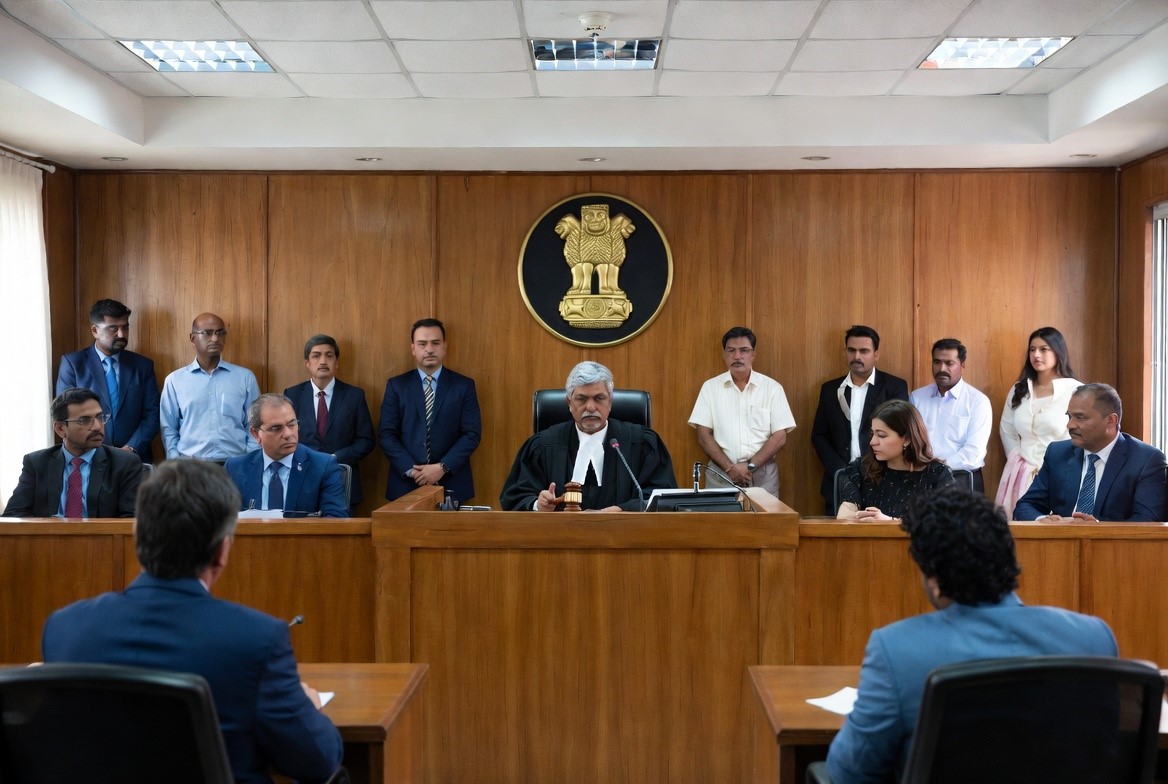
The Constitution is not merely a document written on paper; it is the living force that shapes our daily lives, our dreams, and our aspirations.
Introduction: The Indian Constitution - A Living, Breathing Document
The Indian Constitution is often described as a monumental document - a unique achievement in legislative drafting, a vast repository of ideals, and the representation of a democratic republic's robust foundation. However, for a large number of Indian citizens, it remains a distant and abstract concept - a document confined to the intricate web of legal terminology and the sacred halls of courts. But adopting a revolutionary perspective, what if we interpret it from a different viewpoint? What if we understand that the Constitution, especially its part on Fundamental Rights, is not a static relic but a dynamic, breathing, living entity?
Believing that its most famous articles - 14, 19, and 21 - are not merely theoretical abstractions, but are in fact as essential as oxygen for our daily existence, subtly influencing every decision, from the content we share online to our places of residence, and the treatment meted out to us by those in power. These articles determine the quality and direction of our social interactions, economic transactions, personal choices, and collective actions.
This comprehensive article presents a deep exploration of the transformative power of this trinity of rights - equality, freedom, and life - and reveals the myriad ways in which they silently, yet firmly, guide the complex symphony of Indian democracy in our everyday lives. It is a journey that leaves the arched roofs of courthouses and reaches our homes, workplaces, educational institutions, and public spaces, where these constitutional principles acquire true meaning.
Article 14: Equality Before Law - The Cornerstone of a Just Society
Constitutional Text of Article 14:
"The State shall not deny to any person equality before the law or the equal protection of the laws within the territory of India."
Article 14, often called the "Right to Equality," lies at the heart of the Indian Constitution's soul and forms the foundation of our social, economic, and political interactions. It presents a principle that acts as a powerful barrier against arbitrariness in governmental actions, ensuring that state power is exercised in a reasoned and non-discriminatory manner. This article encompasses two distinct but interconnected legal concepts, each addressing a specific aspect of the administration of justice:
- Equality before the law: This is a negative concept embodying the fundamental principle that all individuals are equal before the law. It implies that no person or institution is above the law, and every person, regardless of their social, economic, or political status, is accountable before the ordinary courts of law. This principle serves as a guarantee against privileges and ensures that the administration of law is impartial and absolute.
- Equal protection of the laws: This is a positive concept imposing an obligation on the State to treat persons in similar circumstances equally. It implies that the State shall apply laws in such a way as to provide equal protection to all persons, and that the application of legal provisions shall not be arbitrary or discriminatory. This principle ensures fairness and consistency in the executive and administrative actions of the State.
Practical Applications in Daily Life:
In Employment and Educational Opportunities:
When an individual applies for a government job, public tender, academic scholarship, or any other state-sponsored opportunity, Article 14 guarantees that the selection criteria will be rational, non-arbitrary, transparent, and non-discriminatory. For instance, if a government advertisement declares that "only male candidates may apply for the post of primary school teacher," this is a clear violation of Article 14 because it discriminates on the basis of gender. Similarly, if a reservation policy for admission to higher education includes a particular community without objective data, it could also be subject to criticism under this article.
Protection Against Arbitrary Administrative Actions:
Imagine a municipal corporation decides to demolish only one particular shop from a row of illegally constructed structures, while leaving other equally illegal structures untouched without any action. This action is not only arbitrary but also a classic violation of Article 14, as it treats individuals in similar circumstances unequally. This principle extends to police actions, taxation, licensing, and other administrative functions, where the right to equality acts as a crucial check on the arbitrary power of the State.
Important Legal Clarification: The Doctrine of Reasonable Classification
It is crucial to understand that Article 14 does not imply universal identical treatment. The Constitution permits the State to classify persons for achieving valid objectives, provided such classification is reasonable and has a rational nexus with a valid state objective. For example:
- Applying higher tax slabs for higher income groups is a valid classification because it aims to reduce income inequality through progressive taxation.
- Providing reservations for socially and educationally backward classes is a valid classification because it aims to address historical injustice and social inequality.
- Granting certain privileges to minority educational institutions is a valid classification because it aims to protect cultural and religious diversity.
The judiciary has developed the doctrine of "reasonable classification," which establishes the criteria that classification must be for a valid purpose, there must be a rational nexus between the classification and the objective, and the classification must not be arbitrary or discriminatory. This nuanced balance establishes a crucial link between the principles of equality and equity, ensuring that the right to equality remains a dynamic tool of justice and fairness, not a mechanical formula.
Article 19: Six Fundamental Freedoms - The Life-Giving Arteries of a Democratic Society
Six Fundamental Freedoms Provided by Article 19:
- Freedom of speech and expression: Freedom of thoughts, opinions, beliefs, and creative expression, including print, broadcast, and digital media.
- Freedom to assemble peaceably and without arms: Freedom to form public meetings, demonstrations, and peaceful assemblies, provided they do not disturb public order.
- Freedom to form associations or unions: Freedom to form political parties, trade unions, social organizations, professional associations, and other cooperative bodies.
- Freedom to move freely throughout India: Freedom to travel and move within any part of the country, without unreasonable restrictions.
- Freedom to reside and settle in any part of India: Freedom to establish residence and settle permanently in any state or territory of the country.
- Freedom to practice any profession, or to carry on any occupation, trade, or business: Freedom to choose a career, establish a business, and engage in economic activities, provided they comply with legal regulations.
Expression in Contemporary Society:
- Expanded Realm of Expression in the Digital Age: Every time a person posts a review on a social media platform, expresses a political opinion, publishes a blog, creates digital art, hosts an online podcast, or even waves a national flag, they are exercising the freedom of speech and expression protected under Article 19(1)(a). This freedom extends to digital media, online publications, cinematic expression, and even commercial advertising, facilitating a pluralistic and vibrant public discourse.
- Socio-Political Power of Collective Voice: Organizing a neighborhood welfare association, forming a trade union to demand better wages and working conditions, establishing a non-governmental organization to spread awareness on environmental issues, or gathering for a peaceful protest against government policies - all these actions fall within the ambit of the freedom of assembly and association protected under Article 19(1)(b) and (c). These freedoms empower citizens to bring about social change through collective action.
- A Right Fostering National Integration and Economic Mobility: A person can work as a software engineer in Bengaluru, be a native of Bihar, and retire in Kerala without needing permission. This freedom promotes national integration, facilitates cultural exchange, and supports a dynamic labor market that fosters economic growth. This right is of particular importance to diverse groups including migrant workers, academic researchers, business persons, and tourists.
- The Engine of Economic Growth and Personal Fulfillment: Choosing one's career path - whether as a doctor, engineer, teacher, street vendor, entrepreneur, artist, or any other profession - is protected by Article 19(1)(g). This freedom not only enables personal self-determination and economic self-reliance but also contributes to the development of a diverse and dynamic economy. It fosters innovation, entrepreneurship, and economic competition, which are essential for overall national development.
The Contemporary Landscape of Digital Expression:
In the current digital age, Article 19(1)(a) has acquired new dimensions in the realm of online expression, social media communication, digital journalism, and online content creation. This freedom provides a constitutional basis for bloggers, YouTubers, social media influencers, digital artists, and online educators to share their thoughts and creative works. However, this freedom is not absolute and is subject to reasonable restrictions such as public order, morality, defamation, security of the State, and friendly relations with foreign states. The judiciary has repeatedly emphasized that such restrictions must be reasonable, proportionate, and necessary for a democratic society.
Article 21: Life and Personal Liberty - The Expansive Universe of Human Dignity
Fundamental Constitutional Text of Article 21:
"No person shall be deprived of his life or personal liberty except according to procedure established by law."
Article 21 is the most dynamic, expansive, and transformative of all fundamental rights in the Indian Constitution. Originating as a narrow procedural guarantee against physical restraint, the Supreme Court of India has progressively expanded the interpretation of Article 21, making it the foundation for establishing a dignified, meaningful, and complete human existence. Through judicial activism, this article has been transformed into a living document that reflects contemporary social realities and the evolving understanding of human rights.
The Broad Rainbow of Derived Rights: Diverse Rights Derived from Article 21
Group of Broad Rights Judicially Derived from Article 21:
- Right to Livelihood: Protection against arbitrary deprivation of employment, including protection against unfair dismissal, arbitrary job loss, and destruction of means of livelihood. This right ensures that economic activities align with human dignity.
- Right to Privacy: Protection of autonomy over personal data, private communication, personal choices, and self-determination. This right is particularly important in the digital age, where data collection and surveillance technologies pose new threats to privacy.
- Right to a Healthy and Sustainable Environment: Access to clean air, pure drinking water, a pollution-free life, and a balanced ecosystem. This right provides constitutional protection to the principles of environmental justice and sustainable development.
- Right to Shelter: Protection against arbitrary eviction without adequate provision for rehabilitation and alternative housing. This right is especially critical for vulnerable communities, slum dwellers, and rural populations.
- Right to Education: Access to free and compulsory education for children, and opportunities for quality education for all citizens. This right is essential for personal development, social mobility, and informed citizenship.
- Right to Health and Medical Care: Access to emergency medical treatment, access to health facilities, and the right to health-related information. This right becomes particularly significant during times of pandemic.
- Humane Rights of Prisoners and Accused: Humane conditions of incarceration, speedy and fair trial, right to legal aid, protection against torture and cruel treatment, and dignified treatment. This right ensures the justice system is reformative, not retributive.
- Right to Information: Access to information about governmental actions, policies, and decisions, promoting transparency and accountability.
- Right to Personal Dignity: Right to respectful treatment, freedom from discrimination, and the right to live with human dignity.
The expansion of these derived rights is a remarkable achievement of the judiciary, transforming Article 21 into a dynamic provision that adapts to changing social needs and the growing understanding of human rights. Justice P. N. Bhagwati has termed this right the "heart of the Constitution," encompassing all aspects of human dignity and personal liberty.
The Evolution of the Right to Privacy in the Digital Age:
In recent years, the Supreme Court has delivered landmark judgments recognizing the right to privacy under Article 21. The Court has held that the right to privacy is a fundamental aspect of personal autonomy, dignity, and freedom. This right covers digital data protection, confidentiality of biometric information, protection of health-related information, and autonomy of personal choices. The Court has clarified that the right to privacy is not absolute and can be restricted for legitimate interests such as national security, public order, and social welfare, but such restrictions must be established by law, reasonable, and proportionate.
Interplay and Integration: The Complex Tapestry of Constitutional Rights
These three articles rarely operate in isolation. Together, they form a complex, interconnected, and powerful protective net, creating a comprehensive safeguard system for individual and collective rights. The fabric of this interconnectedness is one of the most remarkable features of the Indian Constitution, ensuring that the protection of rights is not fragmented or partial, but holistic and comprehensive.
Multifaceted Constitutional Protection for a Journalist:
A journalist who exposes corruption or wrongdoing in a matter of public interest primarily exercises the freedom of speech and expression protected under Article 19(1)(a). This freedom empowers them to gather, analyze, and disseminate information in the public interest. However, if they are arbitrarily arrested for their work or their freedom is illegally restricted, they can invoke the right to personal liberty, the right to a fair procedure, and the right to dignified treatment protected under Article 21. Additionally, if the State selectively targets that particular journalist while remaining indifferent to other similar voices, it constitutes a violation of the right to equality and the right to equal protection of laws under Article 14. This three-tiered protection reflects the strength of freedom of expression in Indian democracy.
A Street Vendor's Struggle and Multifaceted Constitutional Protection:
A street vendor's right to practice their trade (Article 19(1)(g)) is inextricably linked to their right to livelihood, a fundamental right derived from Article 21. This connection underscores the principle that economic activities are not merely commercial ventures but are means of personal dignity and self-reliance. When a municipal corporation or any other government agency evicts a street vendor without a rational policy, due process, or provision for alternative livelihood, it is not only a violation of Article 14 (as it is arbitrary and discriminatory) but also a violation of Article 21 (as it affects the right to livelihood and the right to a dignified life). In this context, the Supreme Court has recognized the "Street Vendors Policy," acknowledging the interconnection between these rights.
The Principle of Constitutional Harmony:
The Indian judiciary has developed the "principle of constitutional harmony," according to which different provisions of the Constitution should be interpreted in harmony with each other, not in conflict. According to this principle, Articles 14, 19, and 21 should be viewed as an integrated whole that balances individual rights and social interests. For example, restrictions imposed on expression in the interest of public order (permitted under Article 19) should be reviewed in the light of Article 14 (reasonableness and non-arbitrariness) and Article 21 (fair procedure and dignity). This harmonious approach ensures that different provisions of the Constitution complement, rather than oppose, each other.
Contemporary Challenges and the Path Ahead: Keeping the Constitutional Breath Alive
Key Challenges in the Current Context:
- Increasing Restrictions on Freedom of Expression: The expansive use of sedition laws, illegal internet shutdowns, control over online expression, misuse of obscenity charges, and arbitrary actions against journalists and social activists continually test the limits and breadth of Article 19. These practices have created an environment where self-restraint and self-censorship are increasing, detrimental to democratic discourse and public accountability.
- Subtle and Overt Discriminatory Practices: Opaque government policies, selective law enforcement, a VIP culture promoting privileges, and institutional biases pose serious challenges to the principle of equality enshrined in Article 14. These practices hinder progress not only towards legal equality but also towards social and economic equality.
- Emerging Issues Related to Human Rights: Rapid environmental degradation, unequal access to healthcare, lack of mental health facilities, the digital divide, and the need for prison reform remain unfinished agendas for the rights derived under Article 21. These challenges underscore the need for both judicial activism and legislative reform.
- Structural Deficiencies in the Judicial System: Lengthy judicial processes, pendency of cases, limited access to legal aid, and the high cost of obtaining justice affect the right to a fair and speedy trial under Article 21. These structural issues limit access to justice and erode trust in the justice system.
The Role of Active Citizenship: As Guardians of Constitutional Values:
The true guardians of these fundamental rights are not only the judiciary and legislature, but an informed, vigilant, and active citizenry. An aware civil society is the first line of defense for protecting constitutional values. Knowing that:
- You can legally challenge an arbitrary government order or administrative action, and that the judiciary provides an effective remedy against violations of constitutional rights.
- Your personal choices, lifestyle decisions, and private matters are constitutionally protected, and state intervention can only occur for valid, reasonable, and proportionate reasons.
- You are entitled to equal treatment and non-discriminatory behavior at police stations, municipal offices, government departments, educational institutions, and workplaces, and any form of discrimination can be challenged.
- Respecting and protecting the rights of others is also our constitutional duty, as rights have a social dimension and are connected to collective welfare.
- Constitutional literacy and legal awareness are not only a right but also a duty of a responsible citizen, essential for meaningful participation in democratic processes.
Active citizenship includes: participating in public affairs, mobilizing support for social justice, protecting human rights, demanding transparency and accountability, and promoting constitutional values. This approach elevates the Constitution from a mere legal document to a social contract.
The Importance of Constitutional Literacy in the Digital Age:
In the current digital age, the importance of constitutional literacy has increased more than ever. Social media platforms, online communities, and digital communication mediums create new arenas for the exercise and protection of constitutional rights. Citizens need to understand that digital expression, online privacy, digital dignity, and internet access fall within the ambit of constitutional rights. Simultaneously, digital citizenship involves balancing freedom of expression with the rights to privacy, respect, and social responsibility. Educational institutions, social organizations, and media have a duty to promote digital constitutional literacy and educate citizens about their rights and duties.
Conclusion: Your Comprehensive Constitutional Toolkit - A Living Ecosystem of Rights
The fundamental rights of the Indian Constitution are not a distant, abstract promise, but a present, active, and practical toolkit that shapes our daily existence. Article 14 is your fundamental guarantee of fairness, reasonableness, and non-discrimination - your armor against arbitrary power, ensuring that state power is exercised prudently and justly. Article 19 is your voice, your movement, your collective action, and your economic agency - the freedom that enables democratic participation, social change, and economic progress. Article 21 is your all-encompassing guarantee of human dignity, your personal autonomy, and your dignified existence - the air you breathe, the water you drink, the privacy you enjoy, and the dignity that is the essence of your humanity.
These rights constantly remind us that democracy does not only live in its formal institutions - the Parliament, the judiciary, and the executive - but lives in the everyday affirmation, daily practice, and continuous reaffirmation of its citizens. Knowing, understanding, and appreciating these rights is the foundation of democratic citizenship - it is breathing freely. Exercising these rights responsibly, while respecting the rights of others, strengthens democracy and promotes social harmony. And protecting these rights for others, especially for vulnerable and marginalized communities, is to ensure that the pulse of this extraordinary document, its living force, and its transformative potential beats for generations to come.
The Constitution, ultimately, is not just what is written in ink on the pages of paper, but what is lived, breathed, and cherished on the streets of India, in its people's homes, in their workplaces, in their educational institutions, in their social dialogues, and most importantly, in their hearts and minds. It is a living, breathing document that speaks to our past, shapes our present, and outlines our future. Understanding it, respecting it, and living it is true democratic citizenship.
Write to Us for Constitutional Law Advice
Contact us for advice on your constitutional rights and legal matters.